Konya Archaeology Museum: From Çatalhöyük to Roman Sarcophagi
In the historic part of Konya, tucked away in the narrow streets behind the Sahip Ata Mosque, lies one of Anatolia’s oldest museums—the Konya Archaeology Museum. Despite its modest façade, its collection spans an entire universe: from the 7,000-year-old Neolithic finds of Çatalhöyük to exquisite Roman sarcophagi featuring reliefs depicting the exploits of Heracles. This is a place for those who want to understand what lay at the very heart of Anatolia long before the Seljuks and Mevlana.
History of the Museum
The Konya Archaeological Museum was founded in 1901 and is considered one of the earliest museums in the Ottoman Empire outside of Istanbul. Initially, the collection was housed in the Karma Secondary School building; it then moved to several locations before relocating to its current building on Sahip Ata Caddesi in 1962. Today, it is one of eight state museums in Konya under the Turkish Ministry of Culture and Tourism.
Over more than a century of operation, the museum has become the region’s leading archaeological center: it receives finds from excavations throughout Central Anatolia, including the famous Neolithic site of Çatalhöyük, as well as artifacts from the Hittite, Phrygian, Hellenistic, Roman, and Byzantine periods.
The Collection and What to See
Prehistoric Hall and Çatalhöyük
The heart of the exhibition consists of artifacts from Çatalhöyük, one of humanity’s oldest proto-urban settlements (circa 7400–6200 BCE). Terracotta vessels, stone tools, obsidian arrowheads, and figurines offer a glimpse into the daily life of the inhabitants of this unique site. Also on display are artifacts from other Neolithic and Early Bronze Age settlements of the Konya Plain.
Iron Age Hall
Painted pottery, bronze and ceramic figurines, objects of Phrygian and Urartian manufacture, and Hellenistic and Classical antiquities form a separate exhibition. This section illustrates how Anatolia became a crossroads of major ancient cultures.
Hercules Sarcophagus
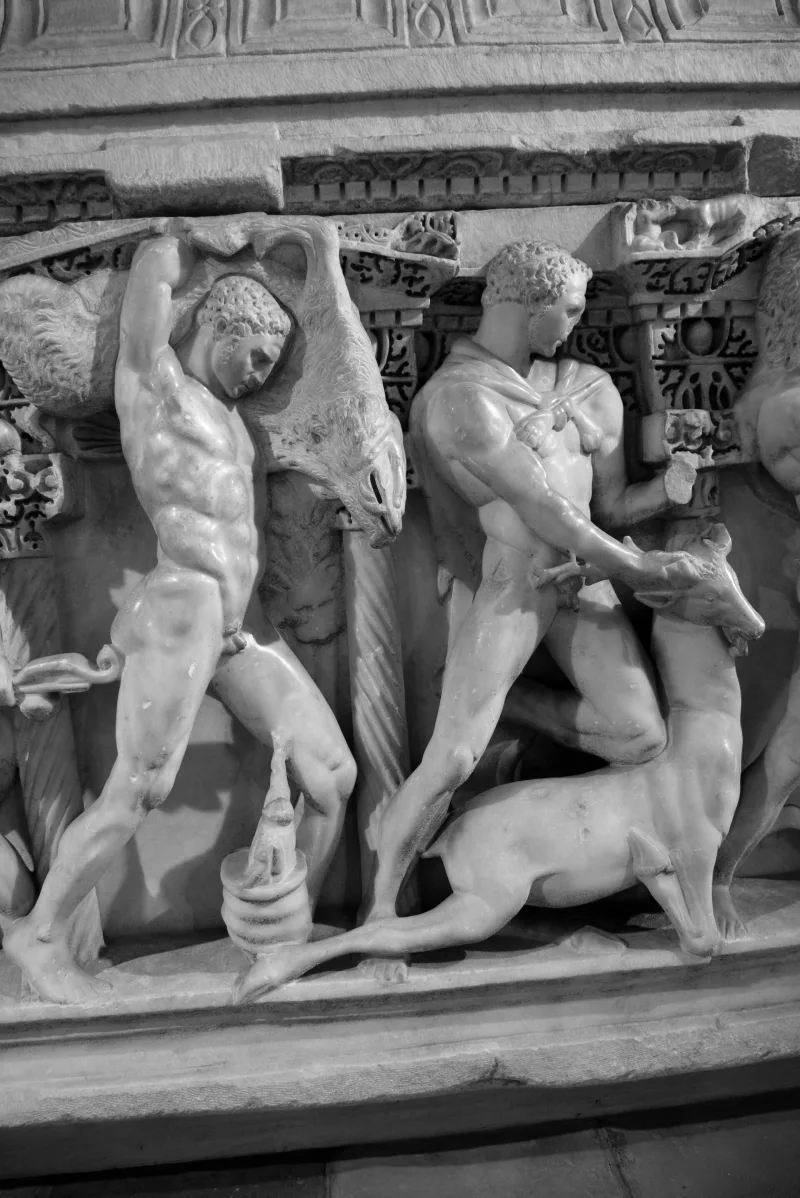
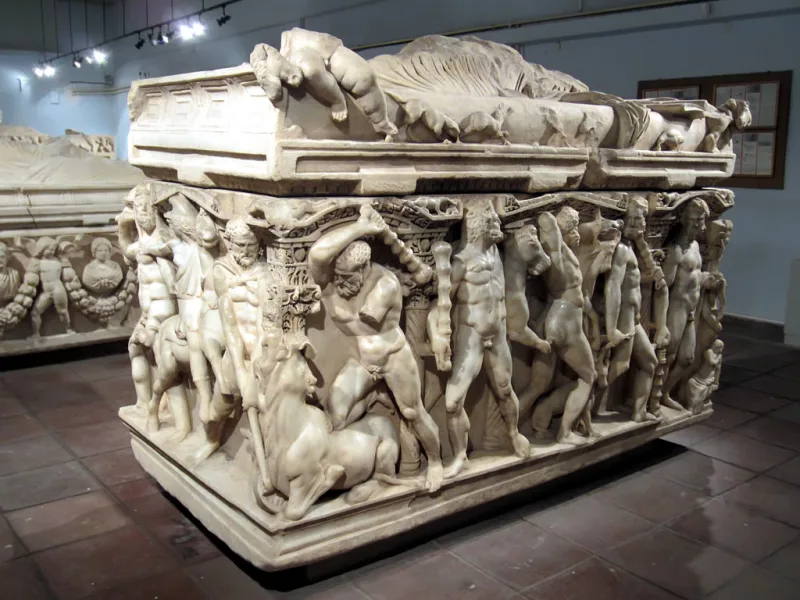
The main gem of the Roman Hall is the Hercules Sarcophagus, a marble sarcophagus from 250–260 CE, decorated with reliefs depicting the Twelve Labors of Hercules. It is an example of the so-called “Sidamar” type: featuring columns at the corners and a complex tiered composition. Such sarcophagi are extremely rare, and the example from Konya is considered one of the finest in Turkey.
Roman Hall
In addition to the sarcophagus, the room features bronze sculptures, delicate glassware, ivory artifacts, and inscriptions in Latin and Greek. The museum houses 231 Greek and 10 Latin inscriptions—an epigraphic treasure that often goes unnoticed by tourists but is extremely valuable to specialists.
Byzantine Section and Amphorae
The Byzantine section of the collection includes mosaics, bronze objects, and religious artifacts. Six trade amphorae, used to transport wine, olive oil, and the fish sauce garum along Mediterranean routes, deserve special attention.
Outer Courtyard
The open-air courtyard features sarcophagi, column capitals, fragments of architraves, and epigraphic specimens from various eras. It is a convenient place to catch your breath and appreciate the scale of the museum’s stone collection.
Interesting Facts
- The Konya Archaeology Museum is one of Turkey’s oldest museums: it opened back in 1901, during the reign of Sultan Abdülhamid II.
- Part of the collection comes from Çatalhöyük—a site included on the UNESCO World Heritage List as one of the key sites for understanding the origins of urban civilization.
- The museum’s Heracles sarcophagus belongs to the rare “Sidamar” type of marble coffins and is considered one of the finest examples in Asia Minor.
- The museum’s epigraphic collection—241 inscriptions in Greek and Latin—makes the Konya Archaeology Museum an important center for researchers of ancient Anatolia.
- Despite the richness of its collections, the museum remains relatively little-visited by foreigners: most tourists coming to Konya limit themselves to the Mevlana Mausoleum and miss out on this archaeological treasure.
How to get there
The museum is located in the historic part of Konya, on Sahip Ata Caddesi, a few hundred meters southwest of the Sahip Ata Mosque and a 15–20-minute walk from the Mevlana Müzesi. From the city center, it’s easiest to walk or take a taxi—the distance is short, but the streets are narrow and somewhat confusing in places.
The nearest tram stop is Alaaddin (Konya Tramvayı line); from there, it’s about a 15-minute walk to the museum. From Konya Havalimanı (KYA) Airport, it’s best to take a taxi or rent a car. GPS coordinates: 37.8680° N, 32.4935° E.
Tips for travelers
Allow about two hours for your visit: the collection is compact but dense, and every room demands attention. It’s worth spending 15–20 minutes specifically on Heracles’ sarcophagus—the reliefs there are detailed, and each feat can be viewed as a separate scene.
It’s convenient to combine a visit to the museum with the Sahip Ata Mosque, the Mevlana Mausoleum, and the Karatay Madrasa—all of these sites are within walking distance. If you’re specifically interested in Çatalhöyük, keep in mind that after visiting the museum, it makes sense to head to the archaeological site itself (about 50 km south of Konya).
Photography is usually permitted without a flash. Bring water and comfortable shoes—the stone floors of the hall and the paved courtyard can be tiring. It’s best to check prices and hours in advance: the operating hours of Turkey’s state museums sometimes change. To understand the depth of Anatolian history, the Konya Archaeology Museum is a must-see.